Everything to Play For: Why the 2028 U.S. Election Matters


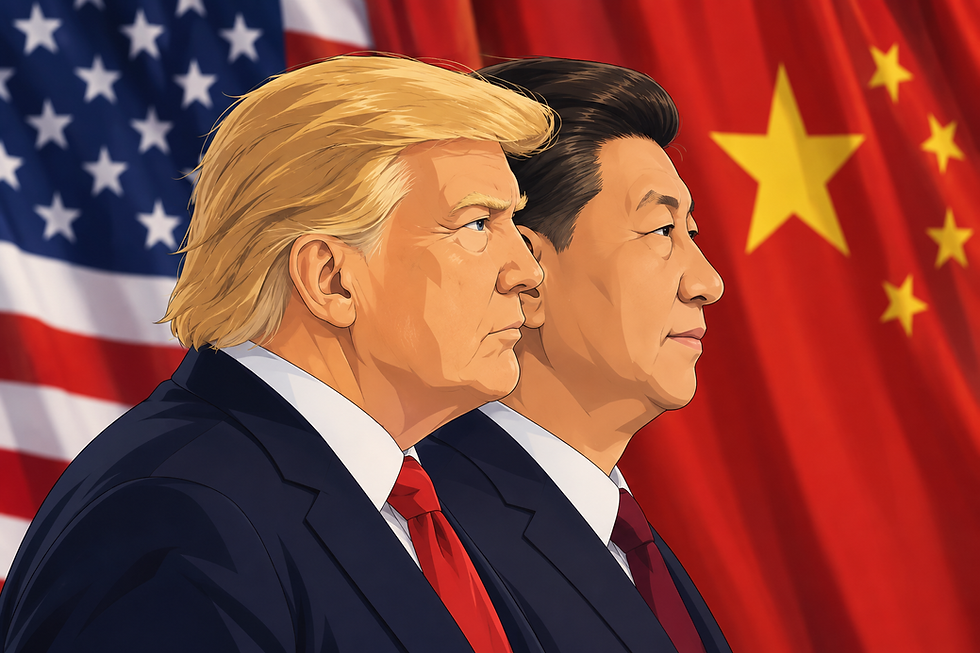
Whatever the pretensions of other nations and barring cataclysmic unforeseen disasters, contagions or act of God and man, the predominant topic for 2028 will be the American presidential election.
Every four years, the world watches the United States vote for their Chief Executive. The attention is not only about political drama, campaign personalities, or the spectacle of American democracy. It is because U.S. elections often carry consequences far beyond America’s borders.
For foreign observers (which means the other 7.95 billion non-Americans on this planet), an American election is never just a domestic event. It is a global story. The outcome can influence wars and peace negotiations, trade policies, financial markets, climate commitments, migration debates, military alliances, technology regulation, and the future of democratic governance. What happens in voting booths across America can affect decisions made in Brussels, Beijing, Kyiv, Jerusalem, Mexico City, Nairobi, New Delhi, Singapore, Tokyo and beyond.
This is one of the defining realities of U.S. political power. The United States is not simply another country choosing its leaders. It is the world’s largest military power, a central actor in global finance, a leader in technology and innovation, and a country whose political choices often shape the international agenda. When American voters select a president and Congress, they are also influencing the direction of U.S. engagement with the world.
Foreign policy is one of the clearest examples. A change in administration can mean a change in tone, priorities, alliances, and strategy. One president may emphasize multilateral cooperation, while another may prioritize national sovereignty and transactional diplomacy. One Congress may support foreign aid, military assistance, and international institutions, while another may question those commitments. For allies and adversaries alike, American elections can create uncertainty, opportunity, or concern.
This is especially true for countries that depend on U.S. security commitments. NATO members, Ukraine, Israel, Taiwan, South Korea, Japan, and many others closely follow American elections because U.S. leadership can affect their own national security calculations. A campaign statement in the United States can become a strategic question overseas. A debate over defense spending in Washington can influence military planning in Europe or Asia. An election result can change how governments assess risk, deterrence, and diplomacy.
Trade is another reason U.S. elections matter globally. American policy on tariffs, supply chains, sanctions, energy, and industrial strategy affects companies and workers around the world. A shift in U.S. trade policy can alter the cost of goods, redirect investment, pressure foreign governments, and reshape global supply chains. For export-driven economies, emerging markets, and multinational companies, the direction of American politics is not abstract. It can affect jobs, prices, contracts, and growth.
Climate policy also depends heavily on U.S. elections. The United States remains a major economy and a central player in global climate negotiations. Its decisions on clean energy, fossil fuels, emissions standards, infrastructure, and international climate cooperation influence what other countries believe is possible. When Washington changes direction, the global climate conversation changes with it. For countries facing rising seas, extreme weather, drought, or food insecurity, U.S. climate policy is not only a national issue. It is a global concern.
American elections also shape the future of technology. The U.S. is home to many of the world’s most powerful technology companies and research institutions. Decisions made by elected officials in Washington can influence artificial intelligence, data privacy, cybersecurity, social media regulation, competition policy, and the digital economy. As technology becomes more central to democracy, warfare, education, and journalism, U.S. elections will increasingly help determine the rules of the digital world.
There is also a symbolic dimension. America has long presented itself as a democratic model, even as it continues to struggle with polarization, inequality, misinformation, voter distrust, and institutional strain. Around the world, both democratic movements and authoritarian governments pay attention to American elections. When the process appears peaceful, transparent, and resilient, it can strengthen faith in democratic systems. When it appears chaotic or deeply divided, it can provide arguments to those who claim democracy is unstable or ineffective.
This is why objective observation plays such an important role during U.S. election cycles. The stories we read from both the 'mainstream' and 'independent' media and analysts do more than report who is ahead in the polls or who wins on election night. They explain what the election means for their audiences at home. They translate American political language, decode institutions such as the Electoral College and Congress, and place domestic debates in global context. They ask how a campaign promise in Iowa, Pennsylvania, Georgia, or Arizona might affect a government, company, community, or conflict thousands of miles away.
Observing U.S. elections for international audiences requires balance and depth. It means avoiding the temptation to reduce America to stereotypes. The United States is not only Washington, and American voters are not a single political identity. The country is regional, diverse, complex, and often contradictory. Its elections reflect economic anxiety, cultural change, demographic transformation, ideological conflict, and competing visions of America’s role in the world.
For those of us who are watching these developments from afar (and yes American presidential politics can occasionally seem like a car crash is <very> slow motion), the challenge is to report both the noise and the meaning. Campaigns produce slogans, rallies, attacks, polls, and breaking news almost every other minute. But the deeper story is about power: who exercises it, how institutions contain it, and how voters choose to direct it. The global significance of U.S. elections lies not only in the personalities of candidates, but in the policies, values, and international consequences that follow.
In an interconnected world, no major American election stays within America. A vote cast in one state can influence a diplomatic relationship on another continent. A congressional race can affect aid, sanctions, or trade. A presidential election can reshape alliances, markets, and global expectations.
That is why the world watches. U.S. elections are not only about America’s future. They are also about the future of the world America helps shape.
So Where Are We in the Current and Upcoming Electoral Cycles?
As Vice President J.D. Vance positioned himself as President Donald Trump’s heir apparent at the Republican Midterm Convection, his principal rival, Secretary of State Marco Rubio, appeared to rule himself out of the running.
Vance, 42, delivered a 40-minute address in the American Airlines Center in Dallas that could have been mistaken for a nomination speech at a GOP convention, in which he attacked Democrats, paid tribute to his friend the late Charlie Kirk on the anniversary of his assassination and took on a heckler with a Mexican flag. The VP was met with chants of “48!” by the MAGA crowd, backing him to become the country’s 48th president, and was congratulated by the 47th afterward, who told reporters aboard Air Force One that his deputy had done “very well” and was a “very talented guy.”
Vance has since joined the four previous presidents – Bill Clinton, George W. Bush, Barack Obama and Joe Biden – in New York City for the twenty-fifth anniversary of the 9/11 attacks at Ground Zero, an event the incumbent ducked as he elected to attend the Pentagon commemoration instead. This act brought the Veep much media coverage and gave him a visual association with the former commanders in chief. In stark contrast, Rubio, 55, spent the week touring South America instead, where he where he was asked about his own ambitions for the White House in an interview with Colombia’s RCN.
“I don’t know what the future holds, but I have no plans at this time,” he answered.
“I’m not a candidate for anything right now. And I’m 100 percent focused on my job, and I have to be because I have two jobs,” he stated, alluding to his secondary role as Trump’s acting national security adviser.
While his declarations were hardly Shermanesque in definitiveness (the Civil War hero and general famously declared that “ "I will not accept if nominated and will not serve if elected) certain 'insiders' have been dropping the informational tidbits that Rubio not only loves being Secretary of State he really enjoys the role and has no intention of running in 2028. The key word there is 'intention,' a hoary old verbal chestnut which leaves the door open a sliver in case Vance actually does not run. But it would be unrealistic to assume that Rubio would not be interested in 2032 or 2036. In the meantime, all he has to do is to wait to see if Trump's preferred scenario of a Vance/Rubio ticket with him as the VP nominee does transpire.
The secretary of state has time on his side. As a Florida senator, Rubio did seek the Republican nomination in 2016, a contest in which he clashed with Trump before suspending his campaign after losing his home state. More recently, he enjoyed a popularity bounce following January’s successful surprise operation to remove Nicolas Maduro from power in Venezuela, only to subsequently recede from the public as the president’s Iranian war took center stage.
For a while, it was reported that Trump enjoyed asking conservatives behind the scenes whether they preferred Vance or Rubio as his heir, pitting the two friends against each other, with the latter politely indicating he would not run as a challenger to the VP. But Rubio was careful about not commenting on whether or not he would be Vance’s running mate.
The president has not publicly endorsed either man, nor has Vance definitely said he intends to run – he could yet choose to opt out, given that his wife Usha Vance has just had their fourth child and the likelihood of Democrats profiting from a sharp reaction against Trump, whose approval ratings are currently lodged at seemingly intractable lows. However, in private, the president has reportedly told his party’s donors: “at the end of the day we need to elect JD.”
While Secretary for War Pete Hegseth and Senator Ted Cruz from Texas are two more names that have recently been bandied about, neither is expected to pose a serious threat to either Vance or Rubio should they choose to run.
On the opposite side of the aisle, Kama Harris, Vance’s predecessor as vice president, has been mentioned as a Democratic nominee again, although she has so far refused to make a definitive statement. Given that nature (and the ever-speculative media in their pursuit of ratings) abhor a vacuum, names such as California Gov. Gavin Newsom, Congressperson Alexandra Ocasio-Cortez and most recently, Georgia Senator Jon Ossoff (who made waves recently by poking Trump over his rather nebulous relationship with his executive assistant Natalie Harp) have joined the ever-burgeoning presidential sweepstakes along with the likes of Kentucky Governor Andy Beshear, Maryland’s Wes Moore and Pennsylvanian Josh Shapiro and former Transport Secretary Pete Buttegieg. In fact, it would be easier to compile a list of those not running for the Democratic nomination than those who might (though the more left-wing or ‘progressive’ may pine for Zohran Mamdani, New York’s omnipresent Mayor).
Much will depend on November’s midterm elections, which the speakers at Trump’s convention attempted to make about immigration, crime and culture war issues, rather than the president’s unpopular war and affordability, two subjects on which voters have routinely expressed their dissatisfaction to pollsters.
One thing for certain though: whomever wins their party’s nominations and then goes on to prevail in the 2028 November general election, will have their chance at placing their stamp not only on American, but global history.
We will all be bystanders watching for what (and who) comes after the tumultuous Trump era.


Comments