9/11: A Day of Infamy 25 Years Later

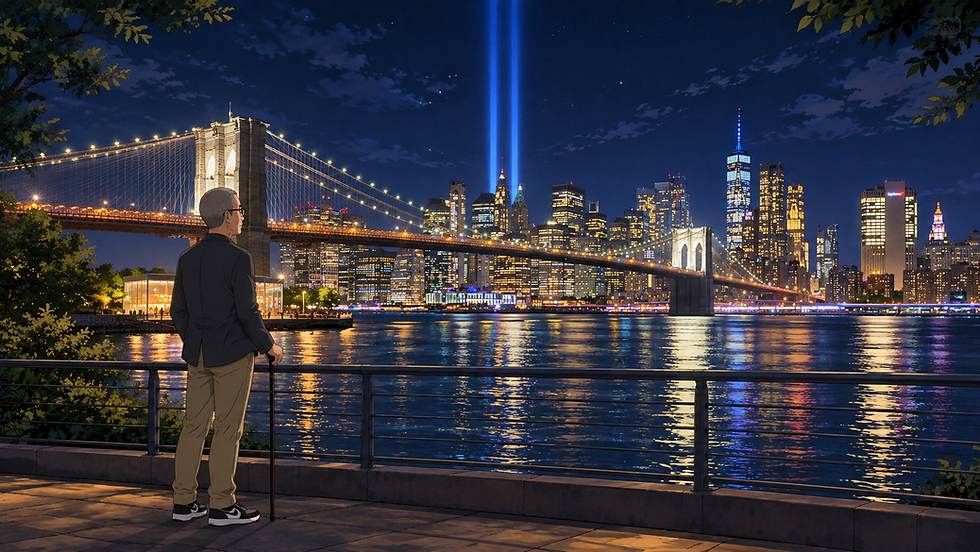
Sept. 11th 2001 is a date that remains forever etched in the memory of an entire generation. Twenty-five years later, the images are still difficult to forget: Planes slamming into New York’s World Trade Center, smoke billowing over the Pentagon in Washington, people running through the streets, firefighters climbing stairs and families waiting for phone calls that would never come.
For millions of Americans, 9/11 divided life into a “before” and an “after.” From both a religious and a humanistic perspective, looking back on that terrible day reminds us of the fragility of life. The events of 9/11 changed the world, but they did not change the character of God. He remains the God who sees the broken-hearted, strengthens the weary, calls His people to love their neighbors and promises that one day suffering will end.
Twenty-five years later, we pray that our individual and collective acts of remembrance will lead us towards greater compassion, deeper faith, less polarization and a more peaceful world.
Evil is a Reality in This World
One of the toughest questions Christians faced after the attacks that killed 2,977 innocent people was that of suffering. If God is loving and powerful, why did He allow such evil to happen? It is a question without an easy answer.
Christianity does not pretend that evil is easily explained. The Bible itself is filled with people who cried out to God in the midst of suffering. The Book of Psalms repeatedly asks, “How long, Lord?” Job wrestled with the loss of nearly everything he loved. Even Jesus, facing the cross, cried out in anguish.
Three days after the attacks, the Rev. Billy Graham, during a memorial service at Washington’s National Cathedral, said the following to a shocked nation:
"First, we are reminded of the mystery and reality of evil. I have been asked hundreds of times why God allows tragedy and suffering. I have to confess that I do not know the answer. I have to accept, by faith, that God is sovereign, and that He is a God of love and mercy and compassion in the midst of suffering."
The lesson of this event is not only about the mystery of iniquity and evil, but, second, it’s a lesson about our need for each other.
Those words gave me some comfort at the time. Christianity does not tell us that suffering is good. Rather, it tells us that God enters into our suffering. At the center of Christianity is the image of Christ on the cross — a God who does not remain distant from human pain, but experiences rejection, violence, grief and death Himself.
When we remember those who died on 9/11, we can believe that their suffering and the grief of those who loved them were not invisible to God.
Courageous Acts
Twenty-five years later, it is also important to remember the extraordinary acts of courage and compassion that emerged from the tragedy. Firefighters, police officers, emergency workers, military personnel, clergy, volunteers and everyday citizens showed remarkable selflessness. Many ran toward danger while others were desperately trying to escape it. Christians recognize in such sacrifice a reflection, however imperfect, of Christ's command to love others sacrificially.
The heroism shown on 9/11 reminds us that courage is not simply the absence of fear. Courage is choosing to do what is right despite fear. The stories of those who gave their lives trying to save others remain powerful examples of that kind of love.
I was staying with my parents that beautiful fall morning. The sky was a sharp blue, the air crisp with autumn breezes chasing away summer’ humid heat. Still groggy I stumbled up from the guest bedroom in the basement and was in the midst of pouring my first cup if coffee when I heard my brother call out from the living room. Something apparently distressing enough to ruffle his typical calm demeanor, was happening live.
Nothing could prepare me for what took place on Sept. 11th.
The channel’s camera was gazing up at the North Tower when at 10:28 a.m. it came crumbling down. The sight of the building falling on itself amid a backdrop of people on the street screaming and wailing is the one thing I remember most from that awful day. I will never forget the loud, crunching sound those steel beams made as the building pancaked. My heart plummeted. In that moment it was as if I went from being a callow career-focused to someone conscious that somehow his world had just changed into something more serious, more portentous, in just a matter of seconds.
To see all that death and destruction was overwhelming. I was also overcome with sadness. It was as if I was no longer even a bystander. I was a North American who had seen his beloved New York scarred, the city’s hitherto familiar skyline forever altered. In that horrific moment I was also a human being who had witnessed the worst act of terrorism in America’s history.
The attacks were carried out in the name of a distorted religious ideology, but Christians must be careful not to respond by condemning entire peoples or religions. Evil committed by individuals or groups should never become an excuse for hatred toward innocent people. Jesus commanded His followers to love their enemies and pray for those who persecute them. That teaching is very difficult to take, even harder to practice, especially when remembering an atrocity, but it is at the very heart of Christian discipleship.
Forgiveness does not mean pretending evil does not exist or happen. It does not mean abandoning justice or forgetting those who were killed.
Forgiveness means refusing to allow hatred to have the final word. Justice ultimately belongs to God, while our responsibility is to pursue truth, protect the innocent, seek peace and love our neighbors.
The passage of 25 years has also changed what 9/11 means. For those who lived through it like myself, the memories can feel immediate. We live in a post-9/11 world where tight security measures at airports, concerts and sporting events have become the norm. In 2001, they were not.
Unity in Grief
For millions of people alive today who were not yet born when the attacks took place, a pre-9/11 world is something they have no knowledge of or experience with. For them, 9/11 is history rather than personal memory.
That places a responsibility on those who remember to tell the story honestly — not only about the destruction, but also the courage, compassion, unity and grief that followed. I’m not so sure — in today’s polarized world where social media hot takes and pithy canned messaging are the norm — that all those elements could come together again. At the same time, misinformation today would spread more rapidly.
In 2001, such technology was not widely available. Cell phones did exist, but we were still largely an analog society. As a result, we were able to come together as a human race to mourn.
While technology has changed how we witness and respond to death and destruction, it has not changed the deeper questions that such moments raise about suffering and hope. Those questions invite us to consider what, if anything, lies beyond death.
Christianity teaches that death and destruction do not have the final word. Jesus’ resurrection is the foundation of Christian hope. Christians believe that even though death is real and grief is painful, death is not the end. God promises a future in which suffering, mourning and death will ultimately be overcome.
Twenty-five years after the attacks, we remember those who died, those who survived, those who served and the families who continue to carry the burden of loss.
We remember the darkness, but we must also remember the light.


Comments