The Measure of a Man: Captain Jean-luc Picard


In the wake of his passing on October 28th, there have been (and will continue to be) countless tributes to the late Sir Patrick Stewart which invariably focus in the man himself – his humor, warmth, humility and generosity of spirit, all qualities with which he infused his memorable characters.
At its best, Star Trek: the Next Generation (TNG) – the vehicle by which Stewart would shoot to global fame - relates a complex, thrilling and evolving story about what happens when humanity opts for hope over hopelessness: like all the other ships in the mythical Starfleet, the Enterprise is home to a diverse, multicultural crew who are free to pursue knowledge, equality and justice in a post-scarcity utopia.
Especially in these times when constraints are more often cited in our lives than possibilities (i.e. the limits of globalism, personal freedom, the collapse of traditional alliances and value structures) how hard is it to even get us to think about a reality – even a fictitious one - where we don’t have money anymore, we don’t have greed, we can cure things. The idea that we can work together and all be up in space – together! – it was almost unique in the late ‘eighties and even more so now.
The entire Enterprise crew are united by their principles, and TNG shows what happens when these principles meet practicality. There’s the United Federation of Planets, the ideologically driven group of planets united in peace, and Starfleet, who explore the universe while upholding the ideals of non-interference and discovery. The crew of the Enterprise believe in these ideals, but frequently the show challenges their resolve. It is in those moments of frisson, when the characters are torn between their ideals and reality, that Next Gen truly shines.
In watching TNG with the fresh eyes of either a new viewer or a long-time devotee, it’s particularly easy to become fascinated with the late Sir Patrick’s portrayal of the show’s lead and enigmatic captain, Jean-Luc Picard, with his outstanding aptitude for leadership. Going beyond mere bravery and displaying an adventurous nature, he exhibits the finely honed skills of a true leader with both compassion and class.
Coupled with his high caliber of leadership, Picard’s mission to create and maintain diplomacy is an emblem of the show. His ability to greet opposing leadership from multi-species encounters while remaining diplomatic in the face of adversity is spellbinding. One could only hope our actual world leaders might someday take cues from this character. More than once we see Picard encounter the angry captain of an opposing ship and have demands placed on him to take immediate action.
Rather than act hastily in his responses though, Picard consistently centers these goals to the forefront of any mission and practices the crucial technique of pausing, even if momentarily, prior to responding to anger, hostility, tomfoolery, or underhanded demands. He does not give the appearance of reaction in his encounters, but rather one of response. Even as red alert bells fire and the ship’s deck crew voice their suggestions, he remains composed. He is able to take that split-second pause and respond, based on what appears to be a wellspring of trust and a guiding internal compass.
This ability to respond lends itself to authenticate his quality of calm strength. Much like the carvings of Egyptian pharaohs standing in a stoic position of power with a slight smile resting upon their lips, Picard gives the appearance of someone who is very much in control in any given situation but does not have the need to flagrantly demonstrate it to others. He is calm in his approach. This isn’t to say he never gets agitated or worried, quite the contrary, but he makes decisions from a place that seems to be guided by an internal sense of calm. When he is on board a Klingon vessel with Data, for example, and is shown a single hardboard for a mattress and told of the ship’s exaggerated lack of luxury, Picard appears enthusiastic about the roughness and does not give away his discomfort at these conditions, so unlike his own comfortable quarters and that smashing blue night suit we see on occasion. Rarely do we see Picard ruffled—even in moments of extreme torture, he manages to somehow keep a modicum or veil of composure.
Picard has his internal wellspring of calm, but this does not make him appear as someone who is a pushover or weak to attacks by his enemies, comrades, and aggressors alike. He frequently matches the energy of his opponent—when someone is casting bold threats upon him, he utilizes quality and tone of voice to suggest that, while he is very aware of the nature of their threat, he will not tolerate it. His firm stance and rigid backbone are matched by the tone of his voice, presenting himself as an equal and opposite force to their energy, leaving no room for speculation. He does not utilize his power to offer obtuse threats or intimidate others with only a bravado, nor does he appear weak in his quest to place democracy and peacekeeping first and foremost. This is a fine line to walk, yet Picard does so masterfully.
Matching energy is not simply about responding to aggression with aggression, it is a delicate diplomatic act. When presented with the cautious and concerned leader of another world in First Contact, Picard meets his energy with gentleness and graciousness. This diplomatic leader cautiously greets Picard and his away team at the urging of an acclaimed scientist. While the planet’s leader slowly warms to Picard, he is angered upon catching the captain in a lie. Picard hesitated to disclose all of their mission and, upon counsel from the scientist, neglected to tell the planetary leader that his first officer was embedded as a spy on the planet.
He matches the concern of this leader by demonstrating his own concern and is able to foster diplomatic relations in what could have otherwise been a disastrous situation. Had he continued to lie or brushed aside the leader’s concern, diplomatic negotiations would have ground to a halt and a greater potential for war would have existed. This episode highlights Picard’s ability to admit his mistakes. He withholds information from this planet’s leader and, rather than make excuses or try to minimize that fact, he apologizes and attempts to rectify his error.
So often those who would like to be called leaders are afraid to openly admit or acknowledge their mistakes. Shoving forth in a bravado is frequently demonstrated as a powerful leadership tool, but it does not inspire confidence in those seeking true leadership.
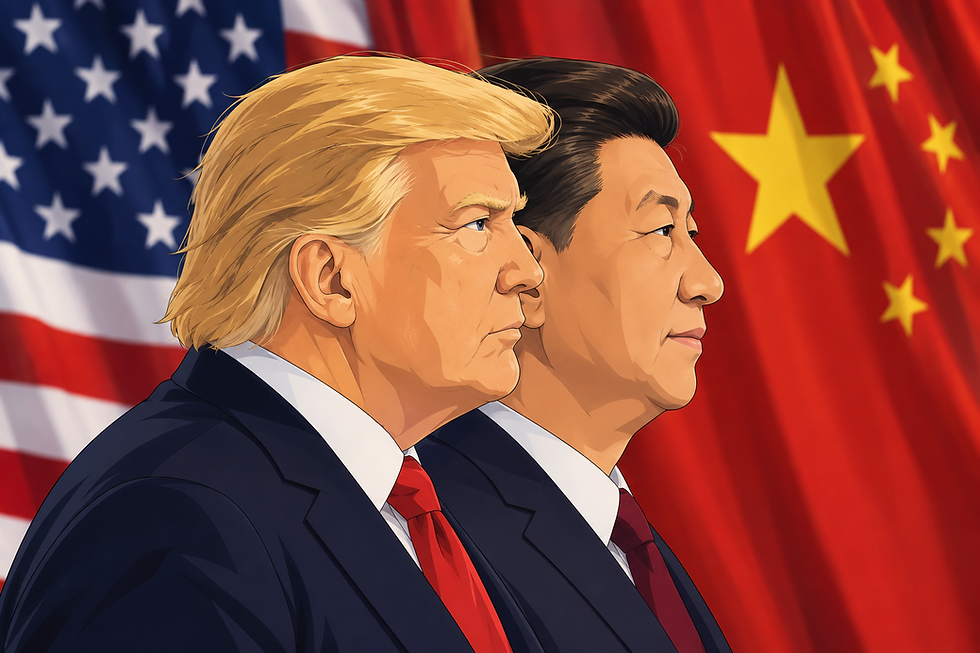
There is an all-too-easy tendency for many TNG fans to compare Picard to the current United States Commander in Chief, who approaches the presidency with nothing short of bravado and occasionally not much to back it up (otherwise the acronym TACO would never even have gained such widespread use). In keeping in tune with the 90s, however, it’s far more interesting to imagine how different The Next Generation would have been with a different crew member as captain.
In ‘New Ground’, Worf (Michael Dorn) utilizes his typical Klingon leadership approach to try parenting his recently discovered young son. The boy is acting out, stealing, and lying. Worf tells his son these actions are dishonorable, and no Klingon would behave this way. He assumes the brevity of his lecture has mended the boy’s behavior. He is wrong. His approach to leadership is a one-size-fits-all path, with fierceness and honor at the crux of his decision-making.
First officer William Riker (Jonathan Frakes) leads with a no-questions-asked style. We see this as early as the pilot episode when he barks commands at his former paramour (Troi) when she expresses concern that he might die in a mine shaft. This is most apparent in the jaw-dropping season six episode, ‘Second Chances’, when Riker meets another version of himself. You’d think they might have a thing or two to sit down and discuss, but for most of the episode, Riker is leading by harsh commands and exertion of a dominant rank.
We could speculate that if Picard met another fully articulate version of himself, he may invite the man in for a cup of tea and a chat. They would probably have a chuckle at some archeological finding that no one else would understand. He would most likely ask his other self to weigh in on the situation, hoping for a different perspective which could lead to insight.
We see countless scenes of Picard in the observation lounge with his officers around him. He favors a round table approach to large decisions and asks each member of the team what their perspective and potential solutions are. More so than just asking, Picard intently listens to their suggestions and takes heed of their experience. He does not automatically assume he knows all of the answers, and nor does he lead by dictatorship.
His ability to listen to all of his advisors is quite distinct from what we would see in a typical military model. He has his warrior counsel in Worf but also surrounds himself with crewmates and advisors who possess gifts not commonly associated with either war or the military. Troi (Marina Sirtis) and Guinan (Whoopi Goldberg) play such fascinating roles as close counsel to the captain, and his portrayal as a leader who listens to their suggestions even when he doesn’t understand their viewpoint creates a fascinating depth to his character.
Guinan (Whoopi Goldberg) in particular, works on an almost psychic intuition, but Picard trusts her inner voice. In the episode ‘Yesterday’s Enterprise’, she tells him something is wrong and guides him to make choices that irrevocably change the fate of all of their lives. He does not know how she knows, but he trusts her and her psychic gifts.
While Picard questions her intuition briefly in the beginning, he starts to see the current ship as she sees it: a ship of peace that has taken a wrong turn in history and finds itself in the middle of a war. Picard is able to feel her vexation at this new version of history and becomes vexed himself. He fervently makes decisions to return the ship through time and space, to a more peaceful time. We can speculate that Guinan’s version of The Enterprise holds the appeal of peace and this preferred vision spurs his action to return.
Perhaps Picard’s guiding light is his clarity in remaining true to his greater goals. He will always choose a diplomatic route when it is available and cares deeply for all life. His protection of all of those on the Enterprise and his crew is paramount, but his desire to protect all of the various lives that they encounter is clear. In the episode ‘Galaxy’s Child’, he goes out of his way to authorize a phaser-led c-section of an unidentified space creature in the hopes that the young creature inside will still have a chance at life after mistakenly killing its parent with a phaser blast. Picard does not simply take the easy way out—firing phasers at unknown entities, or even killing giant space creatures when they threaten to overpower his vessel. He asks his team for solutions and creates a plan that involves keeping everyone alive, including the alien life form.
Jean-Luc Picard is a wholly deserved beloved character. His qualities of leadership and the consistent demonstration of them can be found throughout the show’s long run. We may not have situations where a Cardassian crew resorts to subterfuge or giant space aliens must be saved, but we can all practice these characteristics that make Picard such a great leader, and for those of us who have graduated to command companies, space agencies and miitary organizations, Jean-luc Picard was the best aspirational model we had.


Comments